
Reading
Reading
This is my dog, Einstein

I have a pet. It’s a small dog. His name is Einstein.
This is a picture of him. He likes hiding in the mailbox.
He’s always at home. On Sundays I take him to the park. He runs a lot.
I like my dog. He makes me company when I’m alone. He’s good and quiet. He plays with me and he never barks.
Language Focus
En esta sección se explican las palabras nuevas que se introducen en esta lección. Lee las explicaciones e intenta recordarlas.
| I have a pet | Tengo una mascota |
| his | su (adjetivo posesivo). En este caso, a pesar de que se trata de un animal, y debería usarse el adjetivo its, se usa his porque se considera al perro como un miembro de la familia, como alguien que conocemos (y no como un objeto o un animal cualquiera) |
| picture | fotografía |
| He likes… | Le gusta… Notar que se usa el pronombre personal He a pesar de tratarse de un perro, porque se lo considera alguien querido y conocido. Si fuera un perro cualquiera se usaría It. |
| to hide | esconderse |
| mailbox | buzón |
| always | siempre |
| at home | en casa. Es una construcción fija. Notar el uso de la preposición at. |
| on Sundays | Recuerde que para hablar de días de la semana se usa la preposición on, y los días de la semana siempre se escriben con inicial mayúscula. |
| to take | llevar |
| to run | correr |
| a lot | mucho, un montón |
| I like my dog | Me gusta mi perro |
| He makes me company | Me hace compañía |
| when | cuando |
| alone | solo |
| quiet | silencioso |
| with me | conmigo |
| He never barks | Nunca ladra |
Comprehension Questions
Intenta responder a las siguientes preguntas sobre el texto.
1. ¿Qué tamaño tiene el perro?
2. ¿Cómo se llama?
3. ¿Qué le gusta hacer?
4. ¿Adónde lo llevan los domingos?
5. ¿Ladra mucho?
NEW WORDS AND EXPRESSIONS
En esta sección se explican expresiones para distintas situaciones sociales y nuevas palabras para expandir el vocabulario.
Animals – Animales
- I have a pet.
Tengo una mascota. - I have a dog / cat / rabbit / bird / goldfish as a pet.
Tengo un perro / gato / conejo / canario / pez como mascota. - He / She is…
El / Ella es… - He is black / white / yellow…
El es negro / blanco / amarillo… - He is small / big / huge.
El es pequeño / grande / enorme. - He / She has black / white / soft hair.
El / Ella tiene pelo negro / blanco / suave. - He / She has black / blue / green eyes.
El / Ella tiene ojos negros / azules / verdes. - He / She likes going to the park.
A él / ella le gusta ir al parque. - He / She eats a lot / very little.
El / Ella come mucho / poco. - I like him / her very much.
Lo quiero mucho. - My dog doesn’t bite.
Mi perro no muerde. - My dog doesn’t bark.
Mi perro no ladra. - My cat plays with a ball.
Mi gato juega con una pelota.
Bottom of Form
NEW WORDS AND EXPRESSIONS
Months of the Year – Meses del Año
|
January |
February |
March |
|
April |
May |
June |
|
July |
August |
September |
|
October |
November |
December |
Nota: Se escriben siempre con inicial mayúscula.
Cuando debemos referirnos a una acción que se realiza en un mes determinado, se debe usar la preposición in.
We always go to France in June.
Siempre vamos a Francia en junio.
Classes start in September.
Las clases comienzan en septiembre.
Christmas is in December.
Navidad es en diciembre.
- Seasons – Estaciones
|
winter |
invierno |
|
spring |
primavera |
|
summer |
verano |
|
autumn (GB), fall (US) |
otoño |
|
|
Nota: Normalmente se escriben con inicial minúscula. A veces, se usa mayúscula.
Otoño se dice autumn en inglés británico y fall en inglés americano.

Cuando debemos referirnos a una acción que se realiza en una estación determinada, se debe usar la preposición in.
We always go to France in summer.
Siempre vamos a Francia en el verano.
There are many flowers in spring.
Hay muchas flores en primavera.
It’s cold in winter.
Hace frío en invierno.
Para referirse a una estación pasada o a una venidera, se usan last y next, respectivamente.
We went to France last summer.
Fuimos a Francia el verano pasado.
We are going to England next summer.
Iremos a Inglaterra el verano próximo.
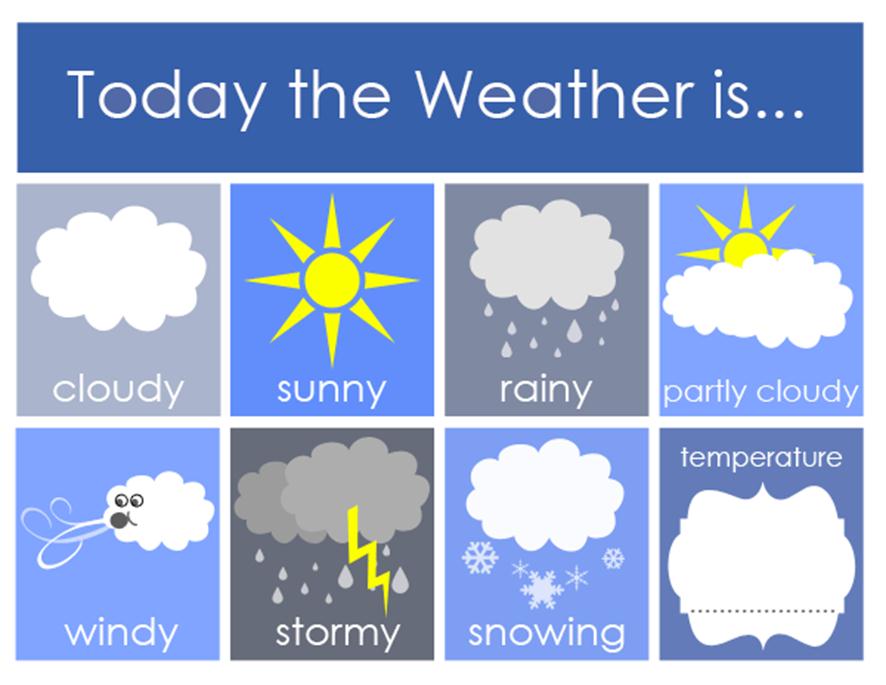
GRAMMAR
There is / There are
Estas expresiones se utilizan para expresar la cantidad de objetos o personas que se encuentran en un determinado lugar.
Ambas formas significan “Hay”. La diferencia es que la primera se utiliza para el singular y la segunda para el plural.

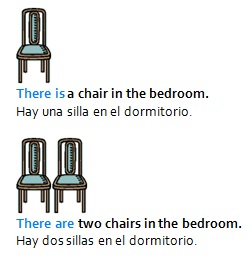
En el primer caso, se hace referencia a una silla, por lo que debe usarse la forma singular.
En el segundo caso, se hace referencia a más de una silla, por lo tanto se usa la forma plural.
La forma negativa se compone de There is o There are seguido de NOT, y es frecuente encontrar la forma contraída There isn’t o There aren’t.
There isn’t a chair in the bedroom.
No hay una silla en el dormitorio.
There aren’t two chairs in the bedroom.
No hay dos sillas en el dormitorio.
Cuando se trata de objetos que no pueden contabilizarse (o sea, los llamados sustantivos incontables), se debe usar la palabra some antes de dicho sustantivo:
There is some sugar on the table.
Hay (un poco de) azúcar sobre la mesa.
There are some shops on this street.
Hay (algunas) tiendas sobre esta calle.
En la forma negativa, se debe usar la palabra any antes de los sustantivos incontables:
There isn’t any sugar on the table.
No hay azúcar sobre la mesa.
There aren’t any shops on this street.
No hay tiendas sobre esta calle.
Los sustantivos incontables son los que no se pueden dividir o cuantificar. Por ejemplo, algunos alimentos como bread (pan), sugar (azúcar), bebidas como milk (leche), water (agua), wine (vino). Veremos más ejemplos en próximas lecciones. En todos estos casos es necesario utilizar some o any.
There is some water on the floor.
Hay agua en el piso.
There is some milk in the fridge.
Hay leche en el refrigerador.
There isn’t any water on the floor.
No hay agua en el piso.
There isn’t any milk in the fridge.
No hay leche en el refrigerador.
GRAMMAR. There is / There are. QUESTIONS
Cuando se desea realizar una pregunta para saber si hay una determinada cantidad de objetos o personas, se usa la forma interrogativa.
Esta forma interrogativa se forma invirtiendo las palabras: Is there…? Are there…?
Es interesante notar que en español solamente se agregan los signos de interrogación, cambiando por lo tanto la entonación, pero los demás elementos de la frase se mantienen intactos.
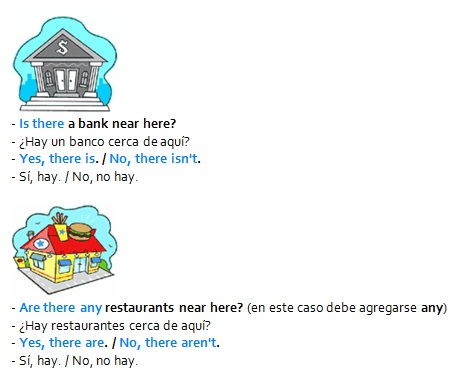
En la forma plural es necesario usar un cuantificador. En el último ejemplo, “two chairs”, se especifica que se pregunta por dos sillas.
Cuando no hay una cantidad determinada, se usa la palabra any.
Are there any chairs in the bedroom?
¿Hay sillas en el dormitorio?
La respuesta puede ser Yes, there is/are o No, there isn’t/aren’t.
Exercise ¿Cómo dirías estas frases en inglés?
1) Hay cinco estudiantes en clase.
Hay vino en esa botella.
Hay un gato detás del auto.
¿Hay tiendas en esta área?
¿Hay agua en el refrigerador?
No hay un libro aquí.
No hay autos en esta calle.
2) Completa los recuadros con There is o There are.
 13 pencils in this box.
 a telephone on the desk.
a dog in the mailbox.
 three books on the desk.
 two dolphins in this picture.
 twenty cigarettes in a packet.
3) Elige la opción más adecuada para responder a las siguientes preguntas.
Is there a cup here?
Yes, there is one.
Yes, it is.
Are there thirteen pencils in this box? 
Yes, there are ten.
Yes, there are.
Is there a computer in the library?
Yes, you are not.
Yes, there is one.
Is there a dog in this house? 
Yes, there is a dog.
Yes, there are two houses.
Are there four books on the desk?
Yes, you are.
Yes, there are.
Are there twenty cigarettes in this packet?
Yes, there are.
Yes, there is.
Is there a book about computers in the library?
Yes, there is one.
Yes, there are one.
Are there three rabbits in the garden?
No, there isn’t three rabbits.
No, there aren’t three rabbits.
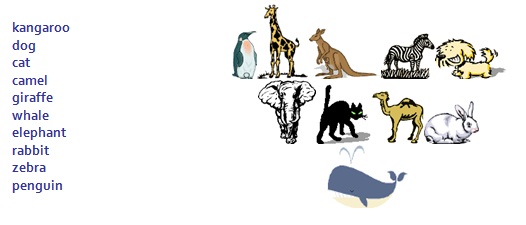
Coloca el nombre correcto de cada imagen:
Pronunciación de la clase: